Turn Down the Music: Why Japanese Adult Films Sound Like Real Life — And Why That Changes Everything
There's a moment you've probably noticed without fully registering it. You're watching a Japanese adult film, and instead of some generic EDM loop hammering away in the background, you hear... a room. Maybe the soft hum of an air conditioner. The rustle of fabric. Breath — actual, unsteady, human breath. And something about it hits differently than anything a Western production has made you feel in years.
That's not an accident. That's craft.
The Western Default: Louder Means Better
American adult productions have long operated under a philosophy borrowed from action movies and car commercials: if you're not filling every sonic inch of the frame, you're leaving something on the table. The result is a familiar sonic wallpaper — thudding bass lines, synthesizer stings, music that tells you exactly how to feel at every moment.
The problem with that approach is the same problem you get with any over-directed experience. It removes the viewer from the equation. You're not experiencing something; you're being guided through a pre-packaged emotional itinerary. The music tells you when to be excited, when to feel intensity, when the scene has "peaked." You become a passenger.
Japanese adult studios, particularly the major production houses operating out of Tokyo and Osaka, have largely rejected this model — not through some formal manifesto, but through a deeply ingrained production sensibility that treats silence and ambient sound as active storytelling tools rather than voids to be filled.
What Minimalist Audio Actually Does to Your Brain
Here's the thing about silence, or near-silence: it creates expectation. When a soundtrack is absent, your brain doesn't switch off — it leans in. Every small sound becomes significant. A sharp intake of breath carries dramatic weight that no string section could manufacture. The creak of a mattress, the soft friction of skin, the particular acoustic quality of a small apartment in a dense city — these details build an environment that feels inhabited rather than constructed.
Psychologists who study immersive media talk about "presence" — the degree to which a viewer feels genuinely located inside a scene rather than observing it from outside. Heavy-handed music scores actually reduce presence, because they remind you that you're watching something produced. They break the fourth wall through your ears even when the visuals maintain the illusion.
Minimalist audio does the opposite. It pulls you in by making the environment feel real. And when an environment feels real, the people inside it feel real. That's the engine behind the emotional resonance that American viewers keep describing when they talk about why Japanese adult content hits differently.
The Role of Breathing — Seriously
If there's one single audio element that separates the best Japanese adult productions from almost everything made in the West, it's the treatment of performer breathing. This sounds almost absurdly simple, but follow the logic.
In most American productions, audio is heavily processed in post. Ambient room noise gets cleaned up, certain sounds get amplified or smoothed out, and the overall mix gets polished to a radio-ready sheen. In the process, the natural rhythm of human breath — uneven, responsive, involuntary — often gets buried or sanitized.
Japanese productions, particularly those from studios with strong naturalistic aesthetics, tend to preserve this. The breathing you hear is messy in the way real breathing is messy. It accelerates and stutters. It catches. These are sounds that your nervous system recognizes at a deep, pre-conscious level as markers of genuine physiological response. You don't analyze it — you just feel it as authentic in a way that's almost impossible to fake convincingly.
This is also why so many American viewers who discover Japanese adult content describe the experience as unexpectedly emotional rather than just physically stimulating. You're not just watching an encounter. You're hearing someone actually present inside it.
Acoustic Space as Character
There's another layer here that rarely gets discussed: the way Japanese productions use the acoustic properties of specific spaces to do narrative work.
A scene shot in a small apartment sounds different from one shot in a hotel room, and not just because the furniture is different. The reverb characteristics, the way sound bounces or gets absorbed, the ambient noise bleeding in from outside — all of this tells a story about where two people are and, by extension, who they might be. It contextualizes the encounter in a way that a generic studio setup with dropped-in music never can.
Many Japanese productions lean into this deliberately. You'll hear street noise from several floors below. The particular quiet of a late afternoon. A television murmuring in another room. These aren't production failures — they're texture. They're the audio equivalent of natural light, and they serve the same purpose: making the artificial feel lived-in.
Why This Resonates With American Audiences Right Now
It's worth asking why this approach lands so well with US viewers at this particular cultural moment. Part of the answer is probably just fatigue. American media consumption across every category has been trending toward authenticity-seeking for years — the podcast boom, the rise of documentary-style content, the backlash against over-produced pop music in favor of lo-fi and stripped-back aesthetics. Viewers are sophisticated about production in a way they weren't twenty years ago, and they've developed finely tuned detectors for artificiality.
Japanese adult cinema, whatever its other conventions and stylizations, tends to satisfy that craving for something that sounds like it actually happened. And in a genre where emotional authenticity is the entire product, that's not a minor aesthetic preference. It's the whole game.
The Underrated Craft Behind the Quiet
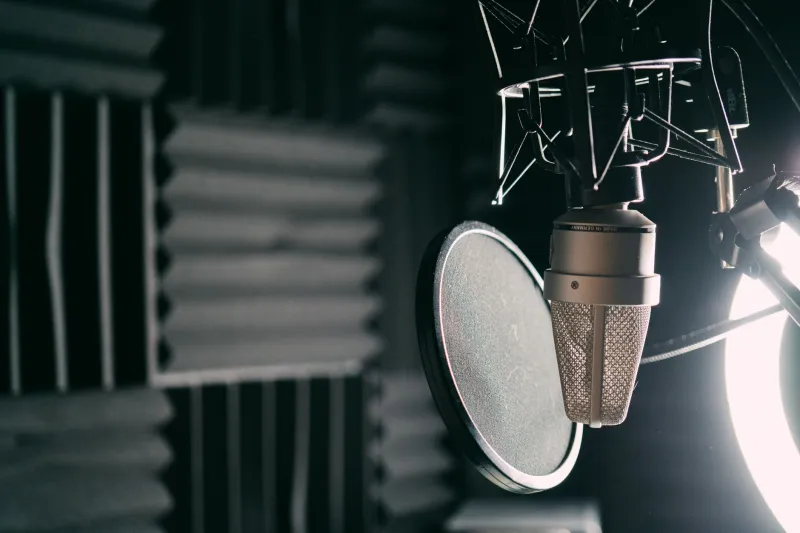
None of this happens by default. Getting minimalist audio right is genuinely harder than layering in a music track. It requires careful attention to mic placement, room acoustics, and what sounds to preserve versus what to correct in post. It requires a production philosophy that values subtlety over spectacle and trusts the viewer to bring their own emotional response rather than having one assigned to them.
The studios that do this well — and there are many — deserve more credit than they typically get, because the audience rarely consciously notices what they're doing. The whole point is that you don't notice it. You just feel more present, more connected, more like something real is happening in front of you.
That invisibility is the mark of genuinely excellent craft. And it's one of the things that keeps American viewers coming back to Japanese adult content even when they can't quite articulate why.
Sometimes the most powerful thing a filmmaker can do is just... stop talking. Let the room breathe. Trust the silence to do its work.
Japanese adult cinema figured that out a long time ago. The rest of the industry is still catching up.