Less Is More: The Quiet Power of Suggestion in Japanese Adult Cinema
There's a scene you've probably encountered if you've spent any real time with Japanese adult content. The camera lingers on a half-open door. A soft light falls across the edge of a tatami mat. Someone exhales slowly off-screen. Nothing graphic has happened yet — and somehow, you're already completely hooked.
That's not an accident. That's a philosophy.
While mainstream Western adult production has spent decades in an arms race toward increasingly graphic content — more explicit, more direct, more everything — Japanese studios have been quietly moving in the opposite direction. And by almost every measure of viewer engagement, they're winning.
The Architecture of Anticipation
Psychologists have a term for what happens when your brain fills in the blanks: constructive perception. When you're shown a partial image or a withheld moment, your mind doesn't sit idle — it builds. It imagines. And critically, what it builds is tailored precisely to what you personally find compelling.
Japanese adult cinema has been exploiting this mechanism for decades, even if the directors behind it wouldn't necessarily frame it in those clinical terms. The slow zoom on a hand. The cut away at exactly the right moment. The sound design that tells you everything while the frame shows you almost nothing. These aren't limitations — they're tools. Carefully deployed, they create a kind of viewer co-authorship that explicit content simply cannot replicate.
Western production philosophy has generally assumed that more visibility equals more engagement. Show everything, leave nothing to chance, eliminate ambiguity. The logic seems sound on paper. In practice, it often has the opposite effect. When there's nothing left to imagine, the viewer becomes a passive spectator rather than an active participant. The experience flattens.
What American Viewers Are Actually Responding To
Streaming data from platforms serving US audiences tells an interesting story. Titles featuring slower pacing, extended build-up sequences, and restrained visual language consistently outperform faster, more explicit alternatives in one crucial metric: rewatch rates. People come back to content that gave them room to breathe — and room to project.
This tracks with broader shifts in American entertainment consumption. Think about the shows that dominate conversation right now. The ones people can't stop talking about are almost never the ones that showed you everything in episode one. The slow burn is having a cultural moment, and it's not limited to prestige drama. Audiences across every genre are demonstrating a growing appetite for restraint — for content that trusts them to be intelligent participants rather than passive recipients.
Japanese adult content arrived at this understanding through a combination of cultural tradition and, yes, regulatory necessity. The result, regardless of how it got there, is a production style that resonates with the way contemporary American viewers actually want to engage with content.
Atmosphere as a Delivery Mechanism
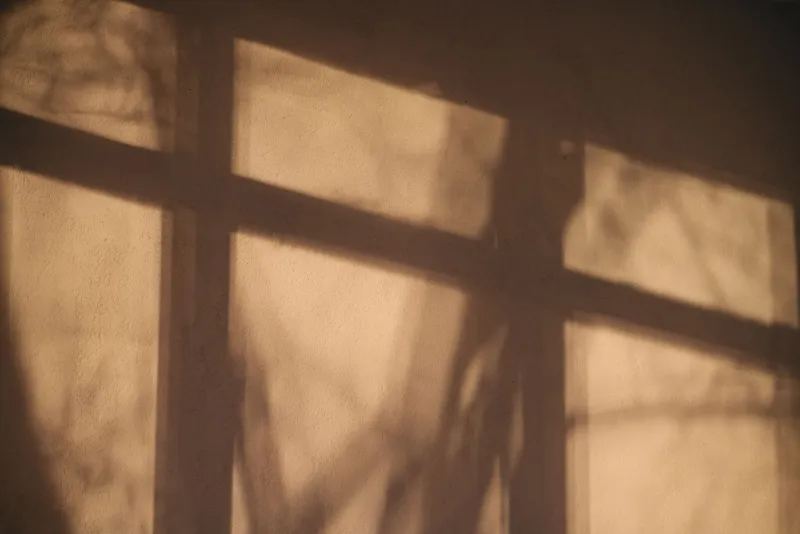
One of the most underrated elements of Japanese adult cinema is its commitment to environment. Sets aren't just backdrops — they're mood infrastructure. The specific quality of light filtering through shoji screens. The particular texture of fabric against skin. The ambient sounds of an ordinary afternoon that make an intimate moment feel grounded and real.
Western production tends to strip environment away in favor of clarity — bright, neutral lighting that leaves nothing obscured. The effect is clinical. Japanese productions often do the opposite, using shadow, warmth, and spatial ambiguity to create an atmosphere that wraps around the viewer and pulls them in.
This isn't just an aesthetic choice. It's a psychological one. Researchers studying emotional response to visual media have consistently found that atmospheric immersion — the feeling of actually being inside a scene rather than watching it from outside — produces stronger emotional engagement and more durable memory formation. You don't just watch the scene. You inhabit it. And that's a fundamentally different experience.
The Restraint Economy
There's an economic logic to this approach that's worth acknowledging. When you build a catalog of content around suggestion and atmosphere rather than explicit visibility, you create something that has a much longer shelf life. Explicit content dates quickly — tastes shift, novelty fades, and what felt transgressive yesterday becomes routine tomorrow.
Content built on mood, character, and emotional architecture ages differently. The atmospheric tension in a well-crafted Japanese production from five years ago feels just as effective today as it did on release. That's not nostalgia — it's the durability of craft over spectacle.
For platforms like NewJAV that curate Japanese adult content for American audiences, this longevity has real value. Titles that continue drawing engagement months and years after release build catalog depth in a way that purely explicit content rarely can. The restraint, in a very real sense, compounds over time.
The Imagination Dividend
Here's the thing about giving viewers room to imagine: they always imagine something better than what you could show them.
This sounds like a paradox, but it's actually just how human psychology works. The brain's reward system responds more powerfully to anticipation than to fulfillment. The moment before the reveal is neurologically more intense than the reveal itself. Japanese adult cinema has built an entire aesthetic around that moment — stretching it, savoring it, making the approach the destination.
American adult content has historically treated that anticipatory space as dead air to be minimized. Get to the point. Don't waste the viewer's time. Japanese production philosophy inverts that entirely: the anticipatory space is the point. Everything else is just resolution.
For viewers raised on a diet of Western explicitness, encountering content built around this philosophy can feel genuinely revelatory. Not because it's more explicit — obviously it isn't — but because it's more present. It demands something from you, and that demand is itself part of the experience.
Why This Matters Right Now
The adult content landscape is changing faster than it ever has. Viewer expectations are evolving, competition is intensifying, and the platforms that are going to matter five years from now are the ones figuring out what actually creates lasting engagement rather than just momentary clicks.
Japanese adult cinema's long-standing commitment to restraint, atmosphere, and the power of implication isn't a quirk or a cultural artifact. It's a sophisticated production philosophy that consistently delivers deeper viewer investment than its more explicit alternatives. American audiences are recognizing this in growing numbers, and the platforms smart enough to meet that appetite are the ones building something durable.
Sometimes the most powerful thing a scene can do is stop just short of showing you everything — and trust you to take it the rest of the way yourself.