Your Brain on Less: The Counterintuitive Reason Japanese Adult Content Turns You On More

There's a moment in a lot of Japanese adult films where the camera lingers just a half-second too long on something mundane — a hand, a collar, the edge of a door frame — before cutting away entirely. Western viewers raised on the explicit traditions of American or European adult content might expect frustration in that gap. Instead, a lot of them report the opposite. Something clicks. Something works.
That's not an accident. And it's not magic either. It's neuroscience dressed up in centuries of Japanese aesthetic philosophy.
What "Ma" Actually Means — and Why It Matters Here
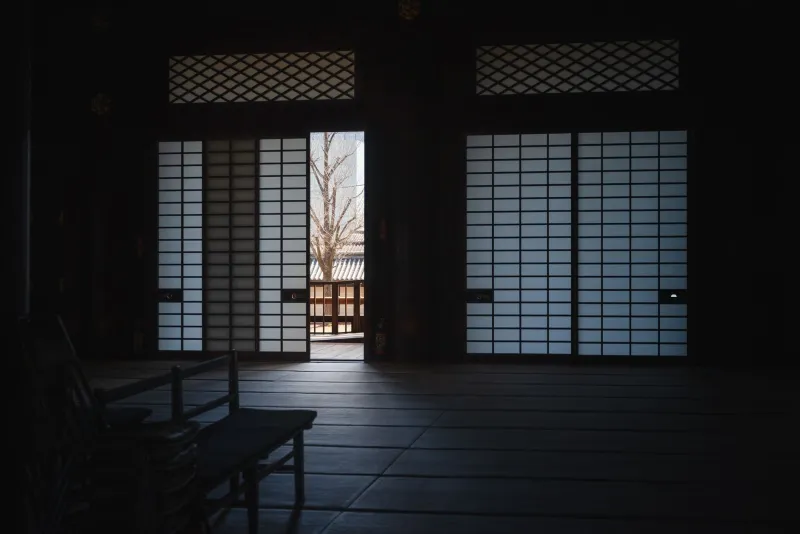
Japanese culture has a concept called ma (間), which roughly translates to "negative space" or "meaningful pause." It shows up in architecture, in music, in the way a traditional ink painting leaves most of the canvas empty. The idea is that absence isn't a void — it's an active element. What you don't fill in carries as much weight as what you do.
Japanese adult cinema, whether intentionally or as a byproduct of the country's censorship regulations, has absorbed this principle deeply. The pixelation and strategic blurring that Western viewers often assume would be a dealbreaker turns out to function a lot like ma. It creates a gap. And your brain, being the relentless pattern-completion machine that it is, rushes to fill that gap with something far more potent than any camera could capture: your own imagination.
This isn't a soft cultural argument. There's hard cognitive science backing it up.
The Imagination Engine: What Neuroscience Says About Incompleteness
Researchers studying anticipatory arousal — the neurological response to expecting a reward rather than receiving one — have found that incomplete stimuli often generate stronger dopamine responses than fully resolved ones. The brain's reward circuitry lights up harder when it's working toward something than when it's simply receiving it.
In plain terms: the buildup hits harder than the payoff.
This is why suspense works in thrillers, why the best jokes have a beat before the punchline, and why a slow-burn romance can feel more electric than an immediate hookup. The same mechanism operates in sexual arousal. When visual information is partially withheld, the brain doesn't shut down — it accelerates. It starts generating its own content, drawing from personal memory, fantasy, and desire in ways that are, almost by definition, more precisely tailored to the individual viewer than anything a production studio could manufacture.
Western adult content, operating under a philosophy of maximum explicitness, essentially bypasses this engine. It delivers the finished product without asking the brain to participate in building it. That's not inherently bad — but it does mean the viewer is passive in a way that Japanese content, structurally, doesn't allow.
What American Viewers Are Actually Saying
Anecdotally, the shift in US viewing habits toward Japanese adult content has been well-documented in streaming data over the past several years. But the why is more interesting than the what.
Talk to American fans who've made the switch, and a few themes come up repeatedly. One is the word "tension." People describe Japanese adult films as having a kind of sustained tension that Western content releases too quickly. Another is "detail" — the attention paid to non-explicit moments, the emotional texture between performers, the way a scene builds context before it builds action.
Several viewers, particularly those in their late 20s and 30s who grew up with unrestricted access to Western explicit content, describe something that sounds a lot like sensory recalibration. After years of maximum explicitness, they found their response to it had flattened. Japanese content, with its different visual grammar, essentially woke their engagement back up.
One viewer put it bluntly: "I'd seen everything. Nothing was surprising anymore. Then I started watching Japanese stuff and suddenly I was actually into it again. I think my brain needed something to do."
The Saturation Problem Nobody Talks About
There's a concept in sensory psychology called hedonic adaptation — the tendency for repeated exposure to a stimulus to produce diminishing returns. You eat the same meal every day, you stop tasting it. You hear the same song on repeat, it stops moving you. The same principle applies to visual sexual stimuli.
Western adult content, for all its production value and explicit freedom, operates in a space of near-total saturation. Everything is visible, everything is maximized, and over time, the viewer's threshold for engagement creeps steadily upward. This is a well-documented phenomenon in media consumption research, and it has real consequences — not just for enjoyment, but for the kind of psychological engagement that makes adult content feel meaningful rather than mechanical.
Japanese content sidesteps this trap almost structurally. The censorship requirements that Western viewers initially see as a limitation function, in practice, as a reset mechanism. They reintroduce visual mystery into a genre that has largely eliminated it. And mystery, as any good storyteller knows, is one of the most reliable drivers of sustained attention.
Restraint as a Creative Constraint That Actually Delivers
It's worth noting that Japanese adult filmmakers haven't simply accepted censorship as a passive limitation. Many have actively built their craft around it, developing visual languages that use framing, implication, and choreography to communicate what can't be shown directly. The result is often a more technically sophisticated product — one where the direction, lighting, and performance carry more weight because they have to.
This is the ma principle in action at an industrial level. The constraint becomes generative. The absence becomes expressive. And the viewer, rather than being handed a finished experience, becomes a co-creator of it.
That's a fundamentally different relationship between content and audience than what Western adult entertainment has traditionally offered. And for a growing segment of American viewers, it turns out to be a more satisfying one.
Why This Challenges Everything Western Adult Entertainment Assumes
The dominant logic of Western adult content has always been that more is more — more explicitness, more visibility, more direct stimulation. Japanese adult cinema, partly by necessity and partly by cultural disposition, has been running a different experiment for decades. And the data, both neurological and behavioral, suggests the results are worth taking seriously.
The subtlety isn't a compromise. It's a feature. The pixelation isn't a flaw in the content — it's a prompt for your brain to do its best work. And the restraint that looks like limitation from the outside is, from the inside of your own head, the thing that makes it land.
Your brain on less, it turns out, is your brain at its most engaged.