Filling the Void: How Japanese Adult Content Became an Unlikely Anchor for Lonely Americans
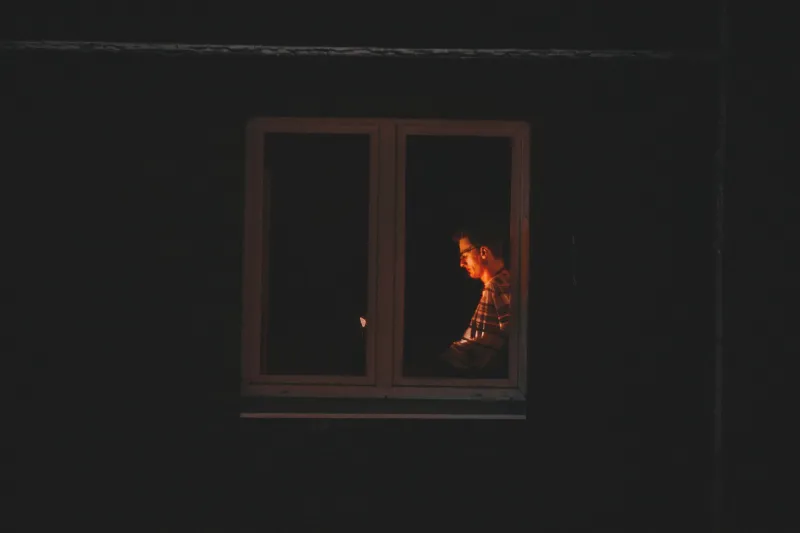
The U.S. Surgeon General called it an epidemic. Researchers at Harvard have been tracking it for years. Loneliness in America isn't a fringe problem anymore — it's a full-blown public health crisis, cutting across age groups, zip codes, and income brackets. And while therapists, policy wonks, and tech critics debate the causes, something quieter has been happening in the background: Japanese adult content has been steadily gaining ground among American viewers, particularly those who report feeling socially disconnected.
That's not a coincidence. And it's worth taking seriously.
The Numbers Don't Lie
Traffic analytics from major adult streaming platforms consistently show Japanese content outperforming other international categories among American users — and that gap has widened meaningfully since 2020. The pandemic accelerated a lot of behavioral shifts, but this one has stuck. Viewers who discovered JAV during lockdown didn't abandon it when the world reopened. If anything, they went deeper.
Why? The easy answer is novelty. But novelty fades. People don't build viewing habits around something that just feels new — they build habits around something that keeps delivering something they actually need.
And what a lot of American viewers apparently need, it turns out, is the feeling that the person on screen is actually present.
Personality First, Everything Else Second
This is where Japanese adult production philosophy diverges sharply from its Western counterpart. Mainstream American adult content has, for decades, been built around a pretty transactional formula: physical performance, visual spectacle, fast gratification. The performers are often interchangeable by design. The emotional texture is minimal. You're not supposed to wonder what the person on screen is thinking or feeling — you're just supposed to watch.
Japanese studios operate from a fundamentally different premise. Performer identity is a core product feature, not an afterthought. Fans don't just know a performer's name — they know her laugh, her nervous habits, the way she reacts to unexpected moments. Studios invest in behind-the-scenes content, interviews, social media presence, and extended narrative setups precisely because they understand that emotional familiarity is part of what they're selling.
For a lonely viewer sitting alone in a studio apartment in Columbus or Sacramento, that difference is enormous.
The Parasocial Engine
Psychologists use the term "parasocial relationship" to describe the one-sided emotional bonds people form with media figures — YouTubers, podcast hosts, athletes, actors. These connections feel real to the person experiencing them, even though the other party doesn't know they exist. They provide a low-stakes simulation of social intimacy, and research consistently shows they can temporarily relieve feelings of loneliness and social exclusion.
Japanese adult content is, whether intentionally or not, a remarkably efficient parasocial delivery system. The format encourages sustained engagement with specific performers over time. The emphasis on personality, vulnerability, and emotional responsiveness gives viewers something to latch onto beyond the purely physical. And the sheer volume of content featuring individual performers means a dedicated fan can spend hours — days, really — in the company of someone who feels, on some level, familiar.
This isn't a criticism. Parasocial connection serves real psychological functions, especially for people who are struggling to build or maintain in-person relationships. The question isn't whether it's "real" connection — it's whether it fills a gap that would otherwise go unfilled.
For a lot of American viewers right now, the answer seems to be yes.
What Western Studios Missed
Here's the uncomfortable truth for mainstream Western adult production: they had decades to build this kind of performer-audience intimacy and largely chose not to. The industry's dominant model prioritized content volume and visual production value over the slower, more deliberate work of making viewers feel like they actually know the people on screen.
Social media changed some of that — independent performers on platforms like OnlyFans figured out the parasocial equation pretty quickly. But the major studios? They're still largely operating on the old transactional model, churning out content that's technically polished and emotionally hollow.
Japanese studios didn't stumble into their approach accidentally. The idol culture that shapes so much of Japanese entertainment — the idea that fans invest in a performer's journey, not just their output — has deep roots in Japanese pop culture broadly. JAV absorbed those norms and built a production model around them. The result is a style of content that, almost uniquely in the adult space, treats emotional engagement as a feature rather than a bug.
Authenticity in the Age of Performance
There's another layer here that's worth naming. American culture in 2024 is saturated with performance. Social media has turned daily life into a highlight reel. Authenticity has become a brand strategy. People are increasingly skilled at detecting when they're being sold a version of something rather than the thing itself — and they're exhausted by it.
Japanese adult content, paradoxically, often reads as more authentic to American viewers precisely because it's less polished in certain ways. The emotional reactions feel less rehearsed. The pacing is slower and less driven by an obvious formula. The performers seem less like they're executing a script and more like they're actually present in the moment.
Whether that perception fully matches reality is almost beside the point. Perception is what drives behavior. And for viewers who are craving something that doesn't feel manufactured, JAV scratches an itch that a lot of Western content simply doesn't.
A Mirror on Something Bigger
None of this is to say that adult content is a solution to loneliness — it isn't, and anyone who's spent time thinking seriously about mental health would push back hard on that framing. Parasocial connection is a supplement, not a substitute. The human need for genuine reciprocal intimacy doesn't disappear because you found a performer whose content you love.
But the surge in Japanese adult content consumption among isolated American viewers is telling us something real about what people are missing and where they're going to find even a partial version of it. The emotional intelligence baked into JAV production — the attention to performer personality, the slower build, the sense that there's an actual human being on screen — is meeting a need that the rest of the adult entertainment industry has largely ignored.
That's a business story. It's also a cultural one. And honestly, it's a pretty sobering reflection of where a lot of Americans are right now.
The loneliness epidemic isn't going to be solved by streaming platforms, adult or otherwise. But understanding why people are reaching for what they're reaching for — and what it's giving them — is part of understanding the moment we're in. Japanese adult content didn't create the void. It just noticed it first.