Smoke, Mirrors, and Tatami Mats: The Clever Production Magic Behind Japanese Adult Cinema's Most Convincing Sets
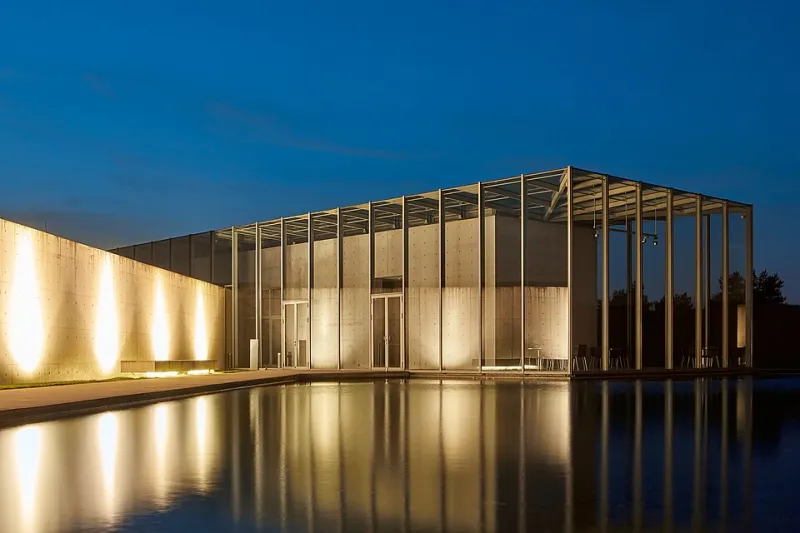
Photo: Anıl Öztaş, CC BY-SA 4.0, via Wikimedia Commons
There's a moment in a lot of Japanese adult productions where you stop and think — wait, where is that? It looks like a high-end hotel room, or a traditional ryokan tucked somewhere in Kyoto, or a sleek Tokyo office after hours. Then you remember you're watching something made on a shoestring budget, and suddenly the whole thing feels like a magic trick you want to figure out.
The truth is, Japanese adult studios have spent decades developing an almost instinctive approach to production design — one that punches way above its weight class. And honestly? Some of what they've figured out is genuinely impressive from a filmmaking standpoint.
Working With What You've Got
Let's put some context on the table. Major American studios spend millions dressing sets for feature films. Even mid-tier Hollywood productions have dedicated art departments with real budgets. Japanese adult productions, by contrast, often work with a fraction of what even a low-budget indie film in the US would allocate to set design.
So what happens when creative people hit a hard wall? They get inventive.
A lot of Japanese adult studios have developed long-term relationships with location scouts and property managers, essentially building a rolodex of apartments, hotel suites, and commercial spaces that can be rented on short notice and transformed quickly. The key is in the details — a few strategic props, adjusted lighting, and careful framing can make a modest Osaka apartment look like an upscale residence. It's the same logic that low-budget indie filmmakers in the US have leaned on forever. Think early Richard Linklater or early Kevin Smith — you work with what's in front of you and make it feel intentional.
The Camera Is the Real Set Designer
Here's something cinematography nerds will appreciate: in Japanese adult production, the camera does a lot of the heavy lifting that set construction would handle in bigger productions.
Tight framing is everything. By keeping shots close and controlled, directors can exclude anything that breaks the illusion — a plain wall becomes a neutral backdrop, a window with the right light becomes a mood setter, a single piece of furniture becomes an entire environment. This isn't laziness; it's discipline. The best operators in the industry have an almost intuitive sense of what to show and what to leave in the dark.
Lighting design plays a massive role here too. Soft, warm practical lighting — think bedside lamps, paper lanterns, the glow from a television — creates atmosphere without requiring expensive equipment. It also flatters subjects in a way that harsh studio lighting doesn't, which is a dual win. American adult productions have historically leaned on brighter, more clinical setups, but there's been a noticeable shift in recent years toward the warmer, more cinematic aesthetic that Japanese productions have long embraced.
Props, Sourcing, and the Art of the Tell
One of the underrated skills in Japanese adult production design is prop sourcing. The right object in the right place can telegraph an entire world to a viewer — a lacquered tray, a specific style of bedding, a particular brand of whiskey on a side table. These choices are often made quickly and on the fly, but they're rarely random.
Producers and directors who've been in the industry for years develop an eye for what reads as authentic on camera. They know which 100-yen shop finds look expensive under the right light, and which premium items are worth the splurge because they'll anchor the whole aesthetic. It's a form of visual storytelling that doesn't get nearly enough credit.
There's also a cultural dimension here. Japanese interior design aesthetics — minimalism, the deliberate placement of objects, the interplay between negative space and focal points — translate naturally into compelling visual frames. A room that follows wabi-sabi principles, emphasizing simplicity and natural textures, can look stunning on camera with almost no budget intervention at all.
When Constraints Become a Signature Style
This is where things get genuinely interesting from an industry-analysis perspective. What started as necessity has, over time, become something of an aesthetic identity for Japanese adult cinema.
The intimate, close-quarters feel of many Japanese productions isn't just a byproduct of small spaces — it creates a specific kind of viewer experience. It feels personal, immediate, less performative than the wide-open, brightly lit sets common in Western productions. Some American and European fans who've crossed over to Japanese content specifically cite this quality as part of the appeal. It feels like you're there, not watching something staged for a stadium audience.
This parallels what happened with Dogme 95 in mainstream cinema — the Danish filmmaking movement that deliberately stripped away production excess and found that audiences connected more deeply with the rawness that remained. Constraints, when embraced rather than fought, can generate a distinct and recognizable style.
Several mainstream Japanese directors have openly cited adult cinema's resourcefulness as an influence on their own low-budget work. The skills transfer in both directions.
What American Productions Could Take Notes On
Look, the US adult industry has its own strengths — production volume, talent diversity, distribution infrastructure. But there's something to be said for the Japanese approach to environmental storytelling. American productions often default to neutral or generic settings, treating the space as irrelevant to the content. Japanese productions, even with less to work with, tend to treat the environment as a character.
As streaming platforms increasingly reward content that feels cinematic and premium — because subscribers have more options than ever and their standards are rising — the production design question is becoming more commercially relevant. Studios that figure out how to create compelling visual worlds efficiently are going to have an edge.
The Japanese adult industry figured this out a long time ago, not because they wanted to, but because they had to. Sometimes the best teacher is a tight budget and a deadline.
The Takeaway
Next time you're watching a Japanese production on NewJAV and you find yourself genuinely curious about where that scene was shot, or why the room feels so perfectly composed, give some credit to the people working behind the camera. There's a real craft operating there — one built from years of problem-solving, aesthetic instinct, and an almost stubborn refusal to let limited resources be an excuse for visual mediocrity.
It's not Hollywood. It was never trying to be. And that, it turns out, is exactly the point.